How to spot a fake SD card, and test one before you trust it
A fake SD card is a small, slow card that has been set up to report a bigger size than it really has. It works until you write past its real capacity, and then new files are lost or corrupted. Spotting one before you shoot with it costs ten minutes and saves a wedding.
The card shows the right size in your camera and on your computer, because the fake is set up to say so. That is why looking at the capacity tells you nothing. The proof is writing data across the whole card and reading it back.
Warning signs before you buy
- The price is far below the same card in other stores. Compare it with the prices on this page and at other shops. A 128GB card from a known brand does not sell at half price in a normal store.
- The seller is hard to trace. A shop with a real address, a phone number you can call and a GST invoice is easier to hold to account than an anonymous listing.
- The label looks wrong. Check the printing for spelling mistakes, a blurry logo or a speed mark that does not match the maker's range.
- The packaging has been opened. Ask for a card in sealed packaging, or ask the shop to show you the box before it is dispatched.
None of these proves a card is fake. A real card from a doubtful seller can still be fine, and a fake can look perfect. That is why the test below matters more than the checklist.
The test: write it full, then read it back
Free tools do this. f3 runs on Linux, Mac and Windows, and H2testw is a Windows tool that does the same job. Both write test files until the card is full and then read them back. If the card is fake, the files past its real size come back wrong.
- Put the card in a reader that is plugged into your computer.
- Copy off anything on it, because the test fills the card.
- Run the write test and then the read test, and let both finish. A big card can take a long time.
- If every file reads back correctly, the capacity is real. If errors appear, the card is not the size it claims.
- Format the card in your camera afterwards, so it starts clean.
The f3 documentation also describes a quicker test and a way to fix a card to its real size. Read what each one does to your data before you run it, because some of them erase the card. A fixed card is still a smaller card than you paid for, so ask for a refund.
A card can be real and still too slow
Capacity is one problem and speed is another. A genuine card can still be the wrong speed for your video. The big number on the front is usually the best-case read speed, while video depends on the minimum write speed, shown as V30, V60 or V90. Our guide on V30 versus V60 shows how to match the class to your camera.
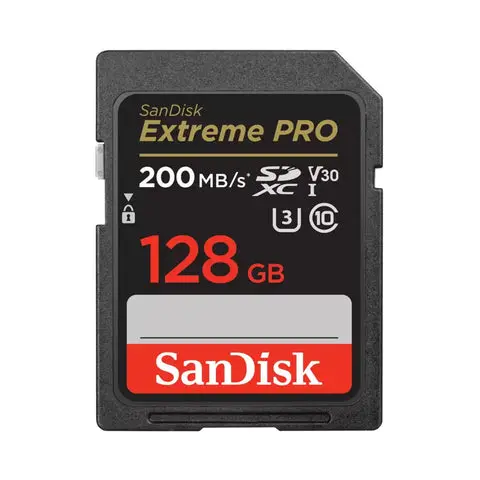 SanDisk Extreme PRO SD 128GB (UHS-I, V30)UHS-I, V30 · from ₹3,999
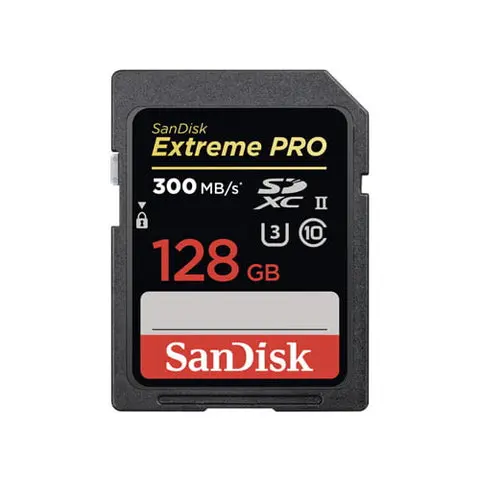 SanDisk Extreme PRO SD 128GB (UHS-II, V90)UHS-II, V60 · from ₹14,999
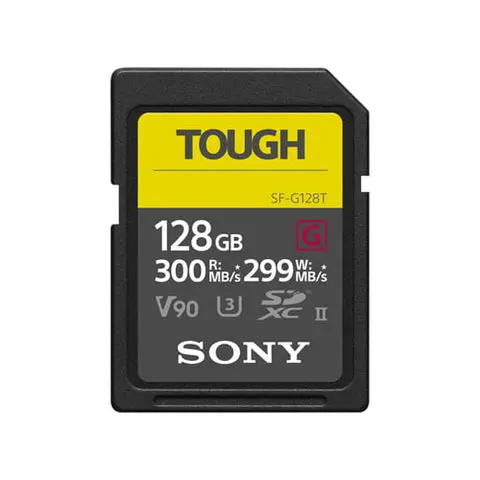 Sony TOUGH SF-G 128GB (UHS-II, V90)UHS-II, V90 · from ₹21,990
What to do if you find a fake
- Stop using the card for anything you cannot lose.
- Keep the box, the invoice and the test results.
- Contact the seller and ask for a replacement or refund. A shop that stands behind what it sells will take a failed test seriously.
- Report it to the platform or marketplace where you bought it, so others are warned.
Before you buy
Buy from a shop that gives a proper invoice and has a phone number that answers. Run the full test on every new card before an important shoot, and note the result. Check each card's price in the table at the top of its page, where the lowest in-stock price and the MRP are shown side by side.
Talk to the shop before you pay
These are camera stores in India, with the price and stock from their own websites. Pick one you can phone, ask your question, then decide.
SanDisk Extreme PRO SD 128GB (UHS-I, V30)


Your message is written for you. Press send in WhatsApp, come back, and tap again for the next store.
Out of stock at a store? Most can arrange it quickly. Call or WhatsApp to ask.
SanDisk Extreme PRO SD 128GB (UHS-II, V90)
Your message is written for you. Press send in WhatsApp, come back, and tap again for the next store.
Out of stock at a store? Most can arrange it quickly. Call or WhatsApp to ask.
Stores change prices often, so confirm on the store's page. See every store we track.
Questions
How can I tell if an SD card is fake?
Look at the seller and the price first, then run a full write and read test. A fake card reports a large capacity but fails when you write past its real size.
Is a fake card dangerous for my photos?
Yes. A card that stops storing data once it passes its real size can look fine until you copy the files back and find the later ones are corrupt or missing.
Can a fake card be fixed?
Some testing tools can reformat a card to its real capacity, but you still have a small card sold as a big one. Return it instead.
Where the specs come from
- fight-flash-fraud.readthedocs.io
- heise.de
- SanDisk Extreme PRO SD 128GB (UHS-I, V30)
- SanDisk Extreme PRO SD 128GB (UHS-II, V90)
- Sony TOUGH SF-G 128GB (UHS-II, V90)
These are the manufacturer pages behind the specs here. How we check them.
Read next
 V30 vs V60 SD card, and which your camera needsTurn your camera's bit rate into a rough card class, then check the list by camera.
 Which memory card for the Sony A6400What Sony's own card table says, and why a faster, costlier card gets you nothing here.
 Which memory card for the Canon R50A V30 UHS-I card is the right buy. Here is why anything faster is wasted.